
Buyer Guides
How to Judge Coconut Charcoal Briquettes Before You Buy a Container
Ash content, fixed carbon, burn time and odour separate a premium shisha briquette from a cheap one. Here is how to read a specification sheet and what to test in a sample.
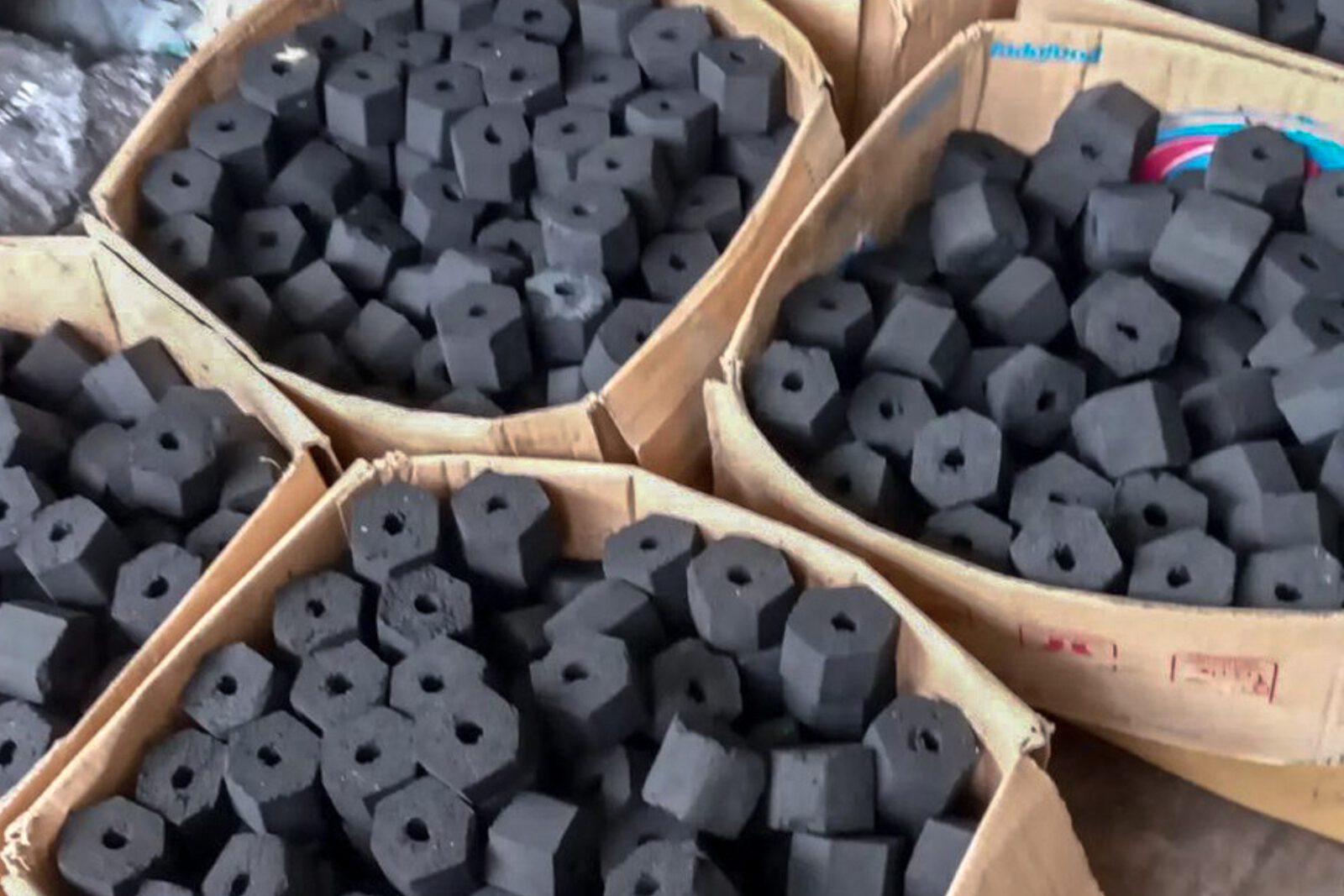
Coconut shell charcoal briquettes look nearly identical across suppliers. The specification sheet is where the differences live, and a sample burn test is where they become obvious. If you are sourcing for shisha or premium barbecue, these are the numbers that decide whether your customers reorder.
Ash content is the number that matters most
Ash is the mineral residue left after combustion. For shisha it is the single most important specification, because high ash means a briquette that crumbles in the bowl, blocks airflow and leaves the customer cleaning up grey dust.
- 2.5% or below — premium, suitable for demanding shisha lounges
- 2.5% to 3.5% — good commercial quality, the normal export range
- Above 4% — almost always indicates filler, usually sawdust or coal dust
Ask for a third-party laboratory report, not a supplier's own figure. Ash is easy to test and easy to overstate.
Fixed carbon drives heat and duration
Fixed carbon is the combustible fraction remaining after moisture, volatiles and ash. A well-carbonised coconut shell briquette tests between 78% and 85%. Below about 75%, the shell was under-carbonised, and the briquette will burn fast, run cool and produce more smoke.
Fixed carbon and calorific value move together. Expect 7,000 to 7,500 kcal/kg from a good briquette. A supplier quoting 8,000+ kcal/kg for coconut shell is either using a different measurement basis or quoting a number they have not tested.
Moisture is a freight cost and a performance problem
Above 5% moisture, you are paying ocean freight on water, and the briquettes will be harder to light and prone to spitting. Reputable producers oven-dry for 12 to 20 hours to bring moisture reliably under 5%. Ask how long the drying cycle runs — a supplier who cannot answer is buying briquettes rather than making them.
Run a real burn test on the sample
Specification sheets can be optimistic. A sample box costs almost nothing to air-freight and tells you everything:
- Time to full ignition. A good cube reaches full heat in 8 to 12 minutes on a burner.
- Total burn duration. Expect 120 to 180 minutes depending on size and shape. Time it.
- Odour. Light one and smell it at ignition. Any chemical, tar or smoky-sweet smell means binder or filler contamination. Pure coconut shell is essentially odourless.
- Sparking. A briquette should not spit or crack. Sparking indicates trapped moisture or uneven particle size.
- Ash behaviour. The ash should stay as a coherent white-grey cap, not collapse into loose dust.
- Dust and breakage. Empty a box onto paper. Excessive fines mean the briquettes will not survive a container journey.
Shape and size affect burn time
Cubes are the shisha standard, most commonly 25 x 25 x 25 mm. Hexagons of 45 or 50 mm diameter burn longer and are popular in the Middle East. Fingers light faster and suit shorter sessions. Larger cross-sections burn longer but take longer to ignite — pick for how your end customer actually uses them.
Questions to ask before you order
- What is the exact raw material composition, and what binder is used?
- Can you provide a third-party lab report for ash, fixed carbon and moisture?
- How long is the drying cycle and what is the final moisture at packing?
- Can you produce to my dimensions and print my private-label artwork?
- What is the loading quantity per 20 ft container and the packing configuration?
Sourcing coconut charcoal? We produce from 100% coconut shell with food-grade tapioca binder, at 2.5–3.5% ash and 7,000–7,500 kcal/kg, with private-label production available. Request a sample box.